
Long Hairstyles Reference Chart
An agentic build pipeline turned an image-model reference brief into a fast, self-contained reference tool with 36 named hairstyles, searchable prompts, and print-ready plates.
- Agentic build pipeline
- Node.js
- Sharp
- Eleventy
- Content Security Policy
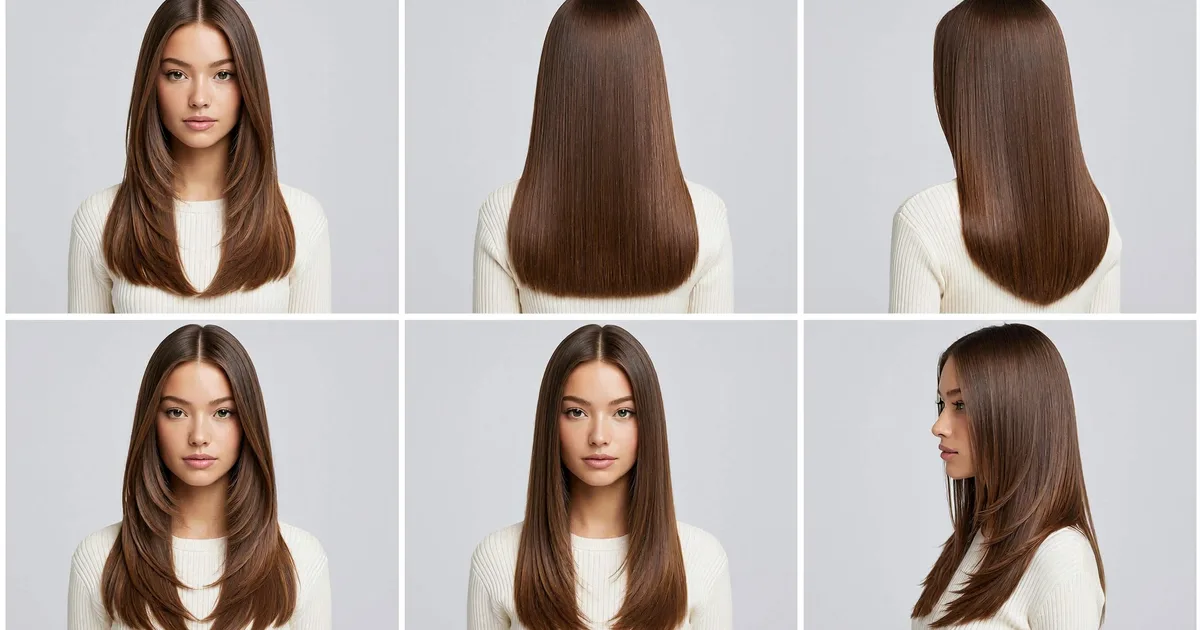
Try it: the finished tool is live at the Long Hairstyles Reference Chart. It is a single page, it loads no third-party scripts, and it works offline once cached.
The brief
Image models are literal. Ask for "a haircut" and you get a generic bob. The words that actually control the result are specific and easy to forget: U-cut, ghost layers, curtain bangs, hime cut, mermaid waves, knotless braids.
The task was to turn a large body of hair-styling knowledge into a lookup an image model can be pointed at, without the person doing the prompting needing to be a hairdresser.
What the pipeline produced
The build ran as an agentic pipeline: research was gathered, structured into a style schema, turned into reference plates, and rendered into a self-contained document with an embedded search filter and copy-to-clipboard prompt boxes.
The finished chart covers 36 named styles across six groups — cut shapes, textured cuts, fringe, texture, braids, and updos. Each style carries a canonical name, common aliases, keyword chips, a copy-ready prompt, and guidance on when to use it. Six reference plates show the shapes side by side so a person can look rather than guess.
The engineering that mattered
Shipping the artifact into a real production site is where the interesting decisions showed up.
The strict content security policy. LiberIT serves with style-src 'self', script-src 'self', and font-src 'self' data:. The chart as originally generated was a single file carrying an inline stylesheet, an inline script, base64-embedded images, and a link to Google Fonts. Every one of those patterns is blocked by that policy, so the page would have rendered as unstyled, inert text. The build was rewritten to emit same-origin parts instead: an external stylesheet, an external script, real image files, and self-hosted webfonts. Nothing on the page touches a third party.
One megabyte down to sixty kilobytes. Moving the six reference plates out of base64 data URIs and into ordinary image files took the HTML payload from 1.3 MB to 61 KB, with the images cached and reused independently. The fonts are served as woff2 files rather than a stylesheet fetched from a font CDN.
Still honest about being offline-capable. The downloadable PDF keeps the print version intact, and the print stylesheet in the extracted CSS still applies, so a reader can print the chart or save it as a PDF.
Why it is in the lab
Small client projects rarely show their working. This one is a plain example of the kind of work LiberIT does: taking a messy source of truth, giving it a structure that a machine can use, and shipping the result as something a person can actually open, search, and print.
If you have reference material, internal documentation, or a process that needs to become something usable, that is the same shape of problem. See business automation or technology services, or get in touch.
Work with LiberIT
This entry is one of several agentic engineering builds. If you have reference material, internal documentation, or a process that needs to become something people can actually use, the same approach applies to your project.